

The “I Don’t Have Enough Money” Belief in Land Flipping
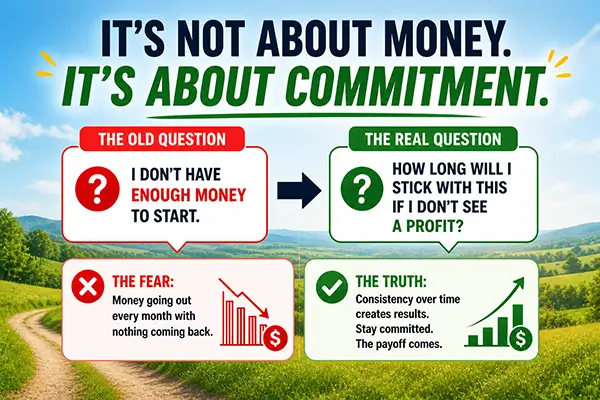
When someone says, “I don’t have enough money to start,” they’re usually not talking about money.
What they’re really asking is something much more honest:
How long will I stick with this if I don’t see a profit?
That’s the fear that actually stops people.
Most people aren’t afraid of spending money once. They spend money all the time. What they’re afraid of is committing to something where money keeps going out and nothing meaningful comes back for a while.
So instead of arguing with the belief “I don’t have enough money,” we need to reframe the problem entirely. Because the issue isn’t capital. It’s commitment under delayed results.
The Real Fear Is Negative Momentum
New investors rarely say this out loud, but here’s what they’re picturing:
Paying for education
Paying for data
Paying for marketing
Paying for software
Paying for skip tracing
Paying for marketing again
All while deals still feel theoretical.
The fear isn’t the cost.
The fear is money going out every month with no proof it’s coming back.
That’s not irrational. That’s pattern recognition from bad businesses.
But land flipping doesn’t break people because it’s expensive. It breaks people because the feedback loop is delayed, and most people underestimate how long they need to stay consistent before results show up.
The Better Question to Ask Yourself
The wrong question is:
“How much is this going to cost me?”
Even this question misses the point:
“How can I do this if money weren’t the issue?”
The right question is:
“How long will I realistically stick to this if I don’t see a profit?”
Because if the answer is “three months” or “until I get discouraged,” the outcome is already decided.
Land flipping doesn’t reward dabbling. It rewards consistency over time.
Why I Believe a One-Year Commitment Is Non-Negotiable
I truly believe you have to commit to this for one solid year.
Not casually.
Not part-time in your head.
A real commitment.
Here’s the pattern I’ve consistently seen in the real world:
Months 1–3: setup, learning, confusion
Months 4–6: activity, conversations, frustration
Months 8–9: the corner gets turned
This isn’t theory. This is observation.
I’ve watched people sit in the red for months, questioning everything, and then suddenly cross into the black. And when it happens, it almost never happens slowly.
It usually comes as a single wire.
A real one.
Five figures.
Clears the account.
That moment isn’t excitement. It’s relief.
Relief that they didn’t quit.
Relief that the time and money weren’t wasted.
Relief that the business finally feels real.
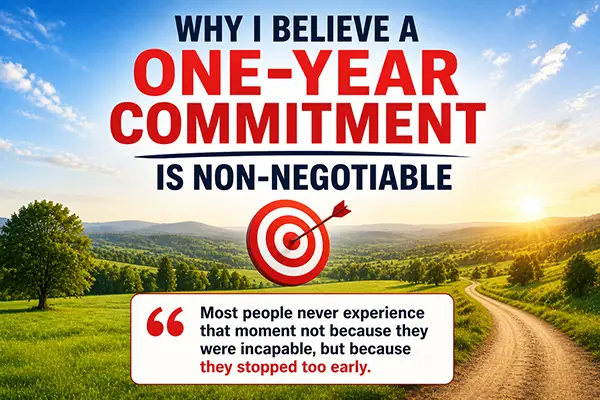
Most people never experience that moment not because they were incapable, but because they stopped too early.
This Is Why “I Don’t Have Enough Money” Misses the Point
When you understand the timeline, the money objection starts to fall apart.
The real risk isn’t starting with too little money.
The real risk is running out of runway before momentum shows up.
Cash pressure shortens patience. It causes people to:
Skip marketing
Start and stop campaigns
Hesitate when they should be consistent
Quit right before things turn
That’s why money matters but not as a prerequisite. It matters as a way to protect commitment.
Marketing Is the First Bottleneck, Not Deals
In land investing, the first meaningful cost isn’t buying land.
It’s marketing.
If you can’t consistently reach sellers, nothing else matters.
The mistake most people make is assuming marketing must be funded out of pocket, month after month, with personal cash. That creates pressure. Pressure leads to inconsistency. Inconsistency kills results.
Early on, I stopped thinking of marketing as an expense and started treating it as infrastructure. Something that needed to be funded in a way that allowed me to stay consistent long enough for the system to work.
That’s when I used 0% interest business credit cards to fund marketing instead of cash.
Not to gamble.
Not to move faster than I should.
But to give myself runway.
Marketing produces data.
Data produces deals.
Deals produce exits.
Exits pay off the marketing.
That loop only works if you stay in it long enough.
Deals Don’t Have to Be Self-Funded Either
Another belief that keeps people stuck is:
“I need money to buy land.”
Sometimes that’s true. Often it isn’t.
Land deals can be funded in multiple ways:
Seller financing
Capital partners
Private money
Transactional funding
Deal-by-deal funders
Good deals attract capital. Bad deals require cash.
If you can price conservatively, protect downside, and show a clear exit, money is usually not the hard part.
Why I Removed the Money Excuse Entirely
After years of doing this and watching capable people stall for no reason other than capital anxiety I decided to eliminate the money excuse altogether.
For marketing, I used a company at LandBossCredit.com to secure 0% interest business credit cards so I could stay consistent without draining cash.
For deals, I now fund them directly through LandBossFunding.com.
That solves the two real pressure points:
Staying consistent long enough
Not passing on good deals
Which means money no longer has to be the reason someone quits early.
What Actually Determines Success
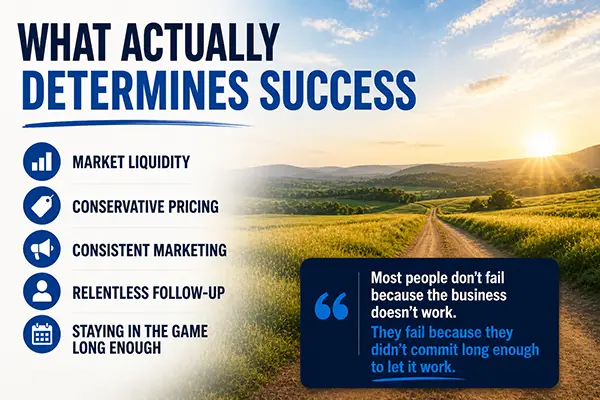
If I had to rank what determines success in land investing, money wouldn’t even be near the top.
What matters more:
Market liquidity
Conservative pricing
Consistent marketing
Relentless follow-up
Staying in the game long enough
Most people don’t fail because the business doesn’t work.
They fail because they didn’t commit long enough to let it work.
The Bottom Line
Stop saying:
“I can’t do this because I don’t have enough money.”
Start asking:
“How do I structure this so I can stay consistent for a full year?”
If you solve that problem, the rest becomes manageable.
And if you stay consistent long enough, that first wire has a way of showing up.
That’s when everything changes.
Land Flipping FAQs
Do I really need a lot of money to start land investing?
Not as much as you think. The bigger issue isn't how much money you have it's having enough runway to stay consistent until results show up. Tools like 0% interest business credit and private deal funding can help you stretch further without draining personal cash.
How long does it take to see results in land investing?
Most investors start turning the corner around months 8–9. The first few months are setup and learning, the middle months are activity and frustration, and then things click. The investors who quit at month 3 or 4 almost never know how close they were.
Do I need cash to buy land deals?
Not always. Land deals can be structured through seller financing, capital partners, private money, transactional funding, and deal-by-deal funders. Good deals attract capital you don't always have to bring your own.
What is the biggest mistake new land investors make with money?
Treating marketing as an optional expense instead of infrastructure. If you can't consistently reach sellers, nothing else in the business works. Inconsistent marketing is the number one reason investors stall out before they ever gain momentum.
What actually determines success in land investing?
Money isn't even close to the top of the list. What matters most is market liquidity, conservative pricing, consistent marketing, relentless follow-up, and simply staying in the game long enough to let the business work.


